Gogglebox's Baasit Siddiqui Brings the Power of Reading to Kingsley School
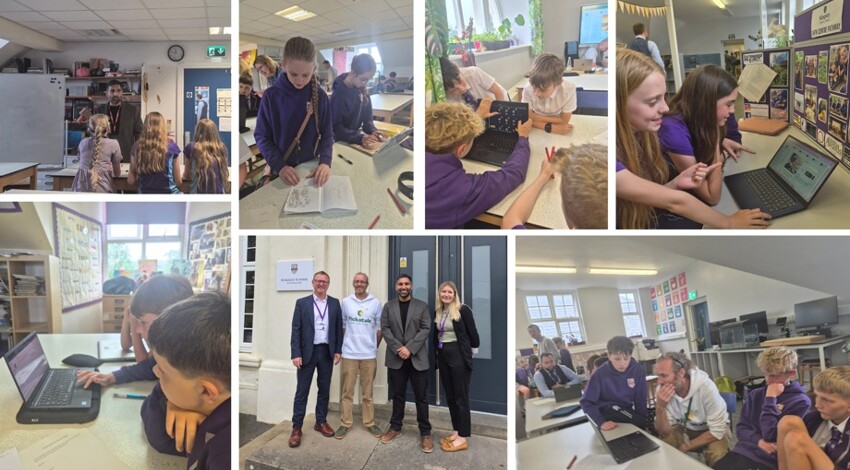
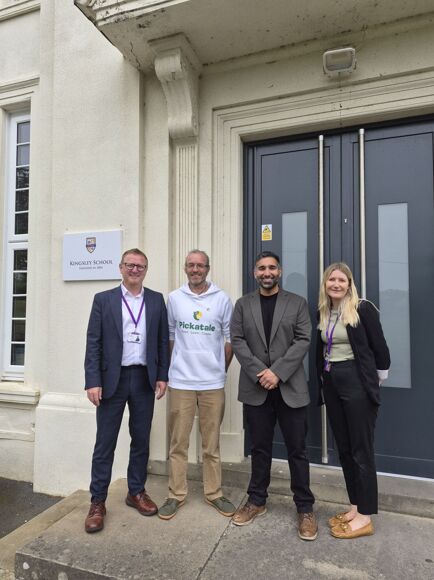
Gogglebox star, keynote speaker, and passionate educator Baasit Siddiqui visited Kingsley School last week to headline a whole-school assembly and inspire students with a message that was as timely as it was timeless: that reading, creativity, and self-belief are the foundations of a thriving life.
The occasion was Books on the Box, a day-long event organised by Kingsley's Head of Literacy, Rose Richards, that brought together Year 6 and Year 7 students for an unforgettable morning of storytelling, collaboration, and creative writing powered by AI. It was a day that asked a big question: what does it look like when the power of great literature meets the possibilities of modern technology? And it answered it brilliantly.
Baasit Siddiqui at Kingsley: Better Me, Better World
Known to millions as a cast member of Channel 4's BAFTA-winning Gogglebox, Baasit Siddiqui is also one of the UK's most sought-after education speakers, with over 20 years working in and around schools and engaging more than 400 schools across the country. He has spoken for organisations including UCAS, NASEN, Teesside University, and Bangor University, and his work is grounded in a simple but powerful conviction: every room he walks into is full of unrealised potential. His job, and his genuine vocation, is to ignite it.
His assembly at Kingsley was built around the theme of Better Me, Better World and drew on his acclaimed 7Cs to Thrive framework: Curiosity, Creativity, Collaboration, Compromise, Communication, Courage, and Community. These are not abstract values — they are the qualities Baasit has identified through years of real delivery with real young people as the ones that genuinely shape how a person moves through the world.
With characteristic warmth, candour, and more than a little humour, he spoke directly to students about the importance of asking better questions, of backing themselves even when it feels uncomfortable, and of understanding that the community you come from is a source of strength — not a ceiling. He spoke about the power of reading. About what happens when you inhabit another person's perspective through a story. About how the young people sitting in front of him already had everything they needed, they just needed to believe it.
It was the kind of assembly that stays with you long after you've left the room. Staff were still reflecting on it at the end of the day. Students were quoting it in the workshop that followed. That is the mark of a truly exceptional speaker, and Kingsley was fortunate to have him.
Rose Richards and the Vision Behind Books on the Box
Events like this do not happen by accident. Behind Books on the Box was Rose Richards, Kingsley's Head of Literacy, whose belief that reading and creative writing deserve to be celebrated, loudly, joyfully, and schoolwide, drove the entire day from concept to reality.
For Rose, the importance of literacy runs far deeper than exam results or curriculum targets. A genuine love of reading, she believes, is one of the most transformative gifts a school can give a young person, not because of what it does for their grades, but because of what it does for them as a human being. Children who read widely and often develop a capacity for empathy, a richness of language, and a comfort with complexity that shapes everything from their relationships to their resilience. They are better equipped to navigate an uncertain world precisely because they have already, through the pages of a book, lived through so many others.
"When a child falls in love with reading, you don't just change their academic trajectory — you change the way they see themselves and the world around them. That is what we are here to do." Rose Richards, Head of Literacy, Kingsley School
Encouraging that love, however, requires more than a library and a reading list. It requires events, experiences, and moments that make books feel exciting, that connect literature to real life, to technology, to creativity, and to the people students admire. It requires a school culture in which reading is celebrated publicly and joyfully, not treated as a quiet, solitary obligation.
That is the culture Rose is building at Kingsley. Books on the Box was its most vivid expression yet: a day that placed stories at the very centre of school life and invited every student to be part of them.
Rose's vision was to create something that was not just another literacy initiative, but a genuine event, a moment that students would remember, talk about, and carry with them. She wanted to bring together the best of what great literature offers and the best of what innovative technology can now make possible, in a way that was inclusive, energising, and fun.
The result was Books on the Box: a day that connected whole-school inspiration with hands-on creativity, and that welcomed the incoming Year 6 cohort into the Kingsley community in the most warm and imaginative way possible. The school owes Rose a great deal for making it happen.
The Workshop: Where Storytelling Meets AI
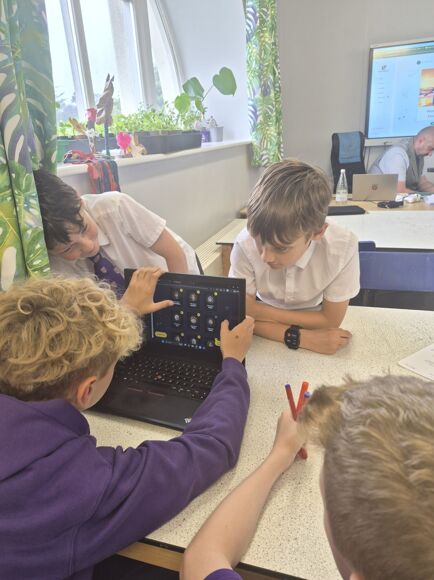
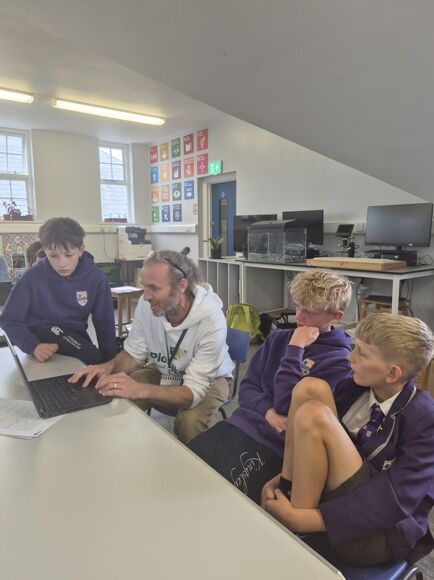
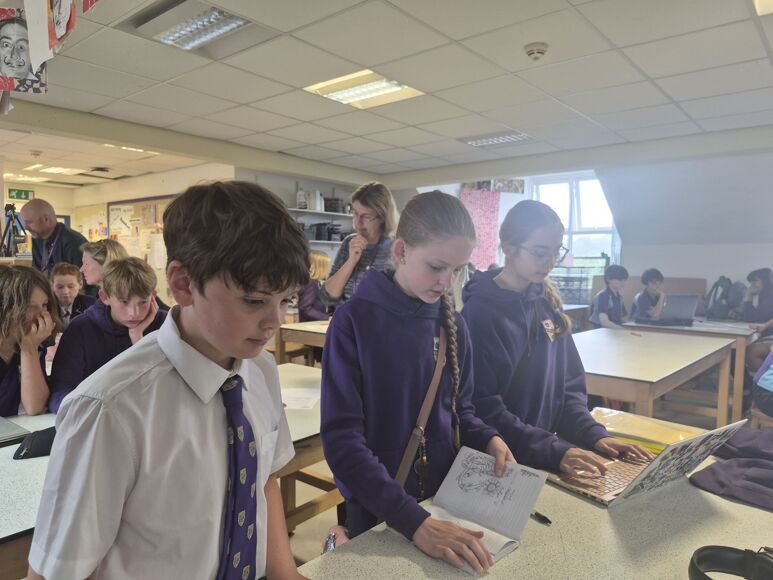
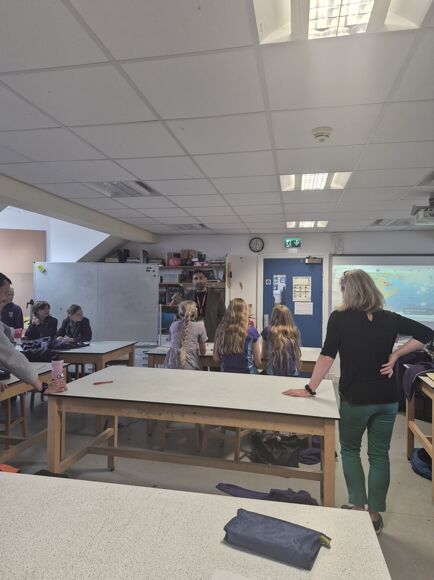
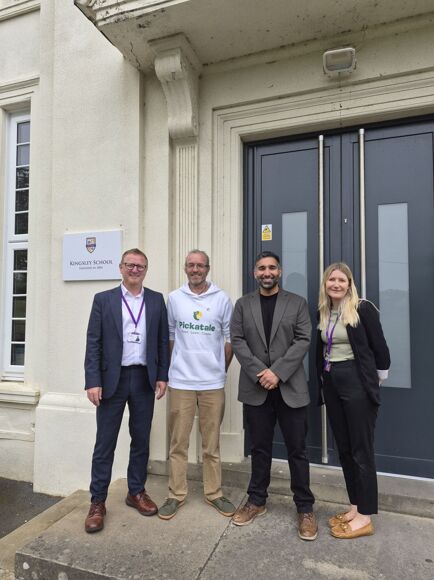
After assembly, Year 6 and Year 7 students headed to the Earth Centre and the Art Room for the hands-on heart of the day: a collaborative creative writing workshop led by Ramsay Melhuish from Picktale, the award-winning reading and literacy platform trusted by schools across the UK and beyond.
Pickatale is not a platform that simply digitises books, though its library of over 2,500 carefully selected titles, spanning fiction, non-fiction, and works from publishers including Oxford University Press, is exceptional in its own right. What makes Pickatale genuinely exciting for educators is Pickatale Create: an AI-powered tool that allows students to build their own original stories, complete with rich vocabulary, literary devices, varied sentence structures, and their own creative voice at the centre of everything.
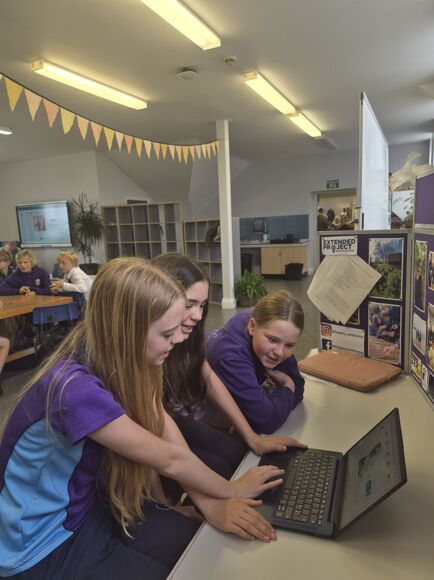
In the workshop, students were not passengers. They were the authors. Using Pickatale Create, they made every meaningful creative decision, the characters, the worlds, the conflicts, the language, while the AI worked quietly in the background as a scaffold, offering suggestions, expanding vocabulary, and helping young writers push past the blank page into territory they might not have reached alone. The technology served the story. The student served the story. The AI served the student.
What emerged was remarkable. The room buzzed with the particular energy that only happens when young people are genuinely absorbed in making something. Ideas were tested, discarded, revised, and refined. Phrases were debated. Characters evolved. And — perhaps most powerfully — Year 6 and Year 7 students sat shoulder to shoulder throughout, building stories collaboratively across a transition that can so often feel daunting.
Introducing AI Safely: Why It Matters and Why Now
There is a conversation happening in schools, staffrooms, and government offices across the country right now — and it centres on a single, urgent question: how do we prepare young people for a world being fundamentally reshaped by artificial intelligence?
At Kingsley, we believe that question deserves a brave and considered answer. Because the reality is this: AI is not coming. It is already here. It is in the tools our students will use at university. It is in the workplaces they will enter. It is in the creative industries, the healthcare sector, the legal profession, the sciences, and every field in between. A young person leaving school today without any meaningful experience of AI — without having learned to use it thoughtfully, critically, and confidently — will be at a genuine disadvantage. That is not alarmism. It is simply the landscape.
But there is an equally important truth sitting alongside that one: how a young person first encounters AI matters enormously. Left to their own devices, without guidance or context, students are far more likely to use AI as a shortcut — something that does the work for them, bypasses the thinking, and ultimately undermines the very skills they need to develop. We see this already with homework, with essays, with revision. AI used unreflectively is not a tool; it is a crutch. And a crutch, used early enough, prevents a young person from ever learning to walk unaided.
This is precisely why Books on the Box was so valuable, and why Rose Richards' instinct to frame AI within a creative, literacy-rich context was exactly right.
In the workshop, students were not handed a technology and left to figure it out. They were guided into a relationship with it. They understood from the outset that the AI was in service of their ideas — not a replacement for them. They were encouraged to question its suggestions, to push back when something didn't feel right, to assert their own voice when the technology pulled them in a direction they didn't want to go. That critical, active engagement with AI, rather than passive consumption of it — is the foundation of genuine AI literacy.
Safe introduction to AI also means introducing it within an environment designed with children in mind. Pickatale Create is not a general-purpose AI tool with all the unpredictability and risk that implies. It is a carefully constructed, educationally purposeful platform where the parameters are set, the content is curated, and the experience is age-appropriate from the ground up. Students were able to explore the creative possibilities of AI without exposure to the wider, unregulated internet — exactly the kind of scaffolded, supervised first experience that builds both competence and confidence.
What Kingsley students gained on Monday was something schools are only beginning to understand how to offer: a first, positive, purposeful encounter with AI that showed them it can be a force for creativity and learning rather than a threat to it. They left not in awe of the technology, not afraid of it, but in command of it — which is precisely where we need them to be.
As AI continues to evolve, the schools that serve their students best will be the ones that engage with it early, honestly, and well. Books on the Box was a meaningful step in that direction — and one that Kingsley is proud to have taken.
"The goal is not to teach young people to fear artificial intelligence or to worship it. The goal is to teach them to think alongside it — critically, creatively, and always with their own values intact. That is what good education has always done with new tools. AI is no different." Mr Robert Pavis, Headteacher, Kingsley School
The Enduring Power of Reading and Writing
And yet, for all the innovation of the day, Books on the Box was at its heart a celebration of something beautifully enduring: the joy of stories.
Reading for pleasure remains one of the strongest predictors of a child's academic success, emotional intelligence, and lifelong wellbeing. Decades of research consistently show that children who read for enjoyment, who choose to pick up a book because they want to, not because they have to, outperform their peers across virtually every measure of academic achievement. More than that, they develop the kind of deep empathy, flexible thinking, and cultural understanding that no examination can fully capture but every employer, community, and relationship will ultimately depend on.
A child who reads steps into other worlds, other voices, other lives. They meet people utterly unlike themselves. They encounter grief, adventure, injustice, love, and humour in a safe space where the stakes are low and the learning is profound. They build vocabulary not through rote learning but through absorption, through encountering words in context, in emotion, in story. Pickatale's vast and diverse library exists to make that experience as accessible, as joyful, and as personalised as possible for every child, whatever their reading level or starting point.
Creative writing, too, is far more than a curriculum exercise. When a student writes a story, really writes it, with investment and imagination and care, they are simultaneously practising logic and empathy, structure and spontaneity, self-expression and communication. They are discovering that their inner world has value. That the images in their head, the characters they imagine, the worlds they can conjure from nothing, are worth committing to the page. That discovery, that a young person's voice matters, is one of the most important things a school can help a child find.
Books on the Box brought these two truths together. The ancient art of storytelling and the modern tools of a changing world are not in competition. At their best, they are in conversation — each making the other richer, more powerful, and more human.
A Joyful Transition
For Kingsley's Year 6 visitors, Monday carried an extra significance that deserves its own moment of recognition. Secondary school transition is one of the most emotionally charged passages in a young person's education — exciting and daunting in equal measure, full of unknowns about friendships, expectations, and whether they will belong.
Books on the Box offered those students something invaluable as their first real experience of Kingsley life: they were not observers. They were participants, contributors, creators. They sat alongside Year 7 peers not as nervous newcomers but as co-authors, equally invested in the stories being built. They were trusted with technology, challenged to think creatively, and sent home with something they had made themselves.
If the goal of transition is for young people to cross the threshold into secondary school feeling confident, curious, and genuinely welcome, Books on the Box delivered that with warmth and imagination to spare.
Thank You
A huge thank you to Rose Richards, Kingsley's Head of Literacy, whose vision, dedication, and meticulous organisation made Books on the Box happen. This was Rose's idea, Rose's drive, and Rose's belief that Kingsley students deserve events that are truly special, and the day reflected every bit of that commitment.
Thank you to Ramsay Melhuish and the wider Pickatale team for bringing such expertise, enthusiasm, and genuine passion for children's literacy to the workshop, and for creating a platform that makes responsible, creative AI genuinely accessible in schools.
And thank you to Baasit Siddiqui, for reminding every person in that theatre exactly what they are capable of. The room was different after he spoke. That is not a small thing.
Thanks also to Jemma Tookey, Christine Lees, and Jonathan Pryce for everything that went into making the day run so smoothly — and to every student who showed up with their curiosity, their creativity, and their willingness to try.
Stories shape us. Reading connects us. And when we equip young people with both the timeless skills of literacy and the confidence to navigate the tools of the future, that is when education truly thrives.
Find Out More
Interested in Kingsley School? Kingsley is a thriving senior school committed to academic excellence, creative thinking, and preparing young people for the world they are actually going to live in. If you would like to find out more about life at Kingsley — including our approach to literacy, technology, and enrichment, we would love to hear from you. Contact our admissions team to arrange a visit.
Find out more about Pickatale Pickatale is an award-winning reading and literacy platform for schools and families, with a library of over 2,500 books and AI-powered creative writing tools designed to inspire a lifelong love of reading. Visit Pictale to explore the platform and start a free trial.
Find out more about Baasit Siddiqui Baasit Siddiqui is a keynote speaker, conference host, and educator with over 20 years of experience inspiring young people and schools across the UK. To book Baasit for your school or organisation, visit baasitsiddiqui.com.